Craft Corner: Driftwood Boats
For anyone who missed it, a couple of weeks ago I shared the news that I have been shortlisted for the Kelpies Prize for Writing 2026. The story I submitted is about a wee gust of wind, Wilma, who longs to be seen and understood. In the extract shared in the shortlist announcement, Wilma encounters a stranded fishing boat, a scared puffling, and a small boy with a kite. So, in the run-up to the award ceremony in September when the winner will be announced, I thought it would be fun to come up with some craft ideas related to the story, featuring boats, puffins and kites!
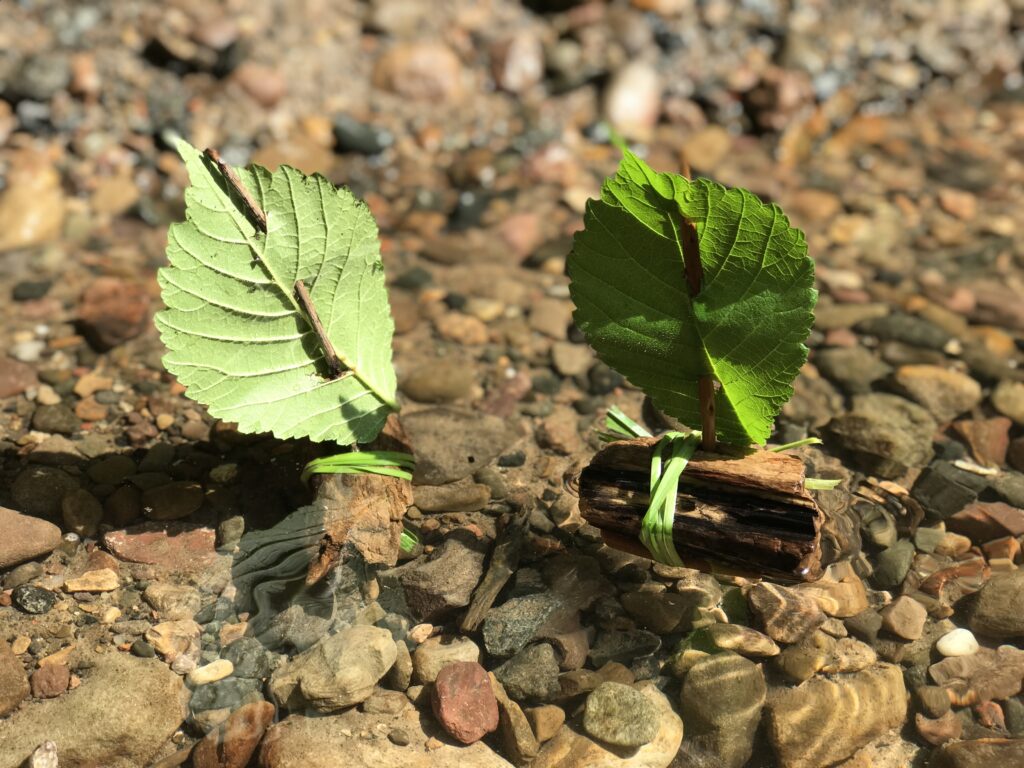
To start us off, the first craft is making driftwood boats out of natural materials. Not quite the same as fishing boats, but here’s a reminder of Wilma’s encounter with the fishing boat in the story:
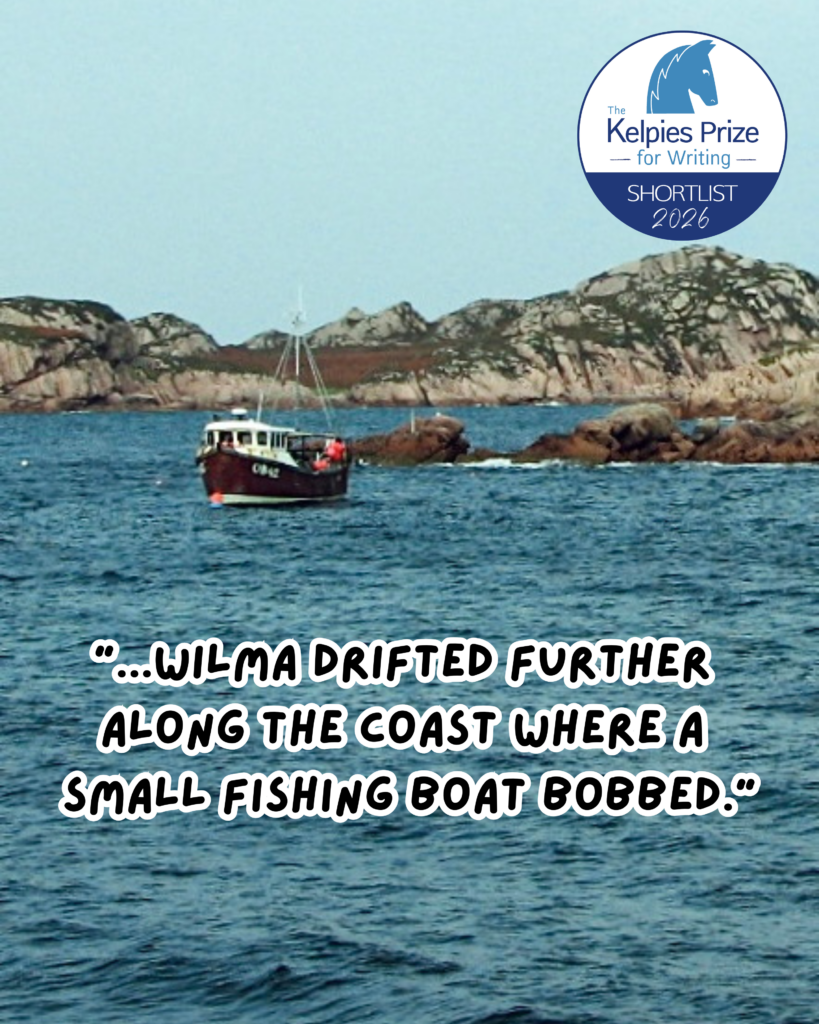
Wilma drifted further along the coast where a small fishing boat bobbed. Its engine had coughed and gone quiet, and now it was drifting towards sharp black rocks. The crew leaned over the side, helpless.
Wilma filled her chest with cool sea air.
“Huff… puff…”
Ripples tickled the water.
“Huff… puff…”
The ripples grew into waves, nudging the stranded boat.
Slowly, slowly, Wilma pushed it towards the harbour.People cheered as the boat slid into safety..
“The tide has brought the boat in!” someone cried.
“It was me!” Wilma called.
But no one heard her.
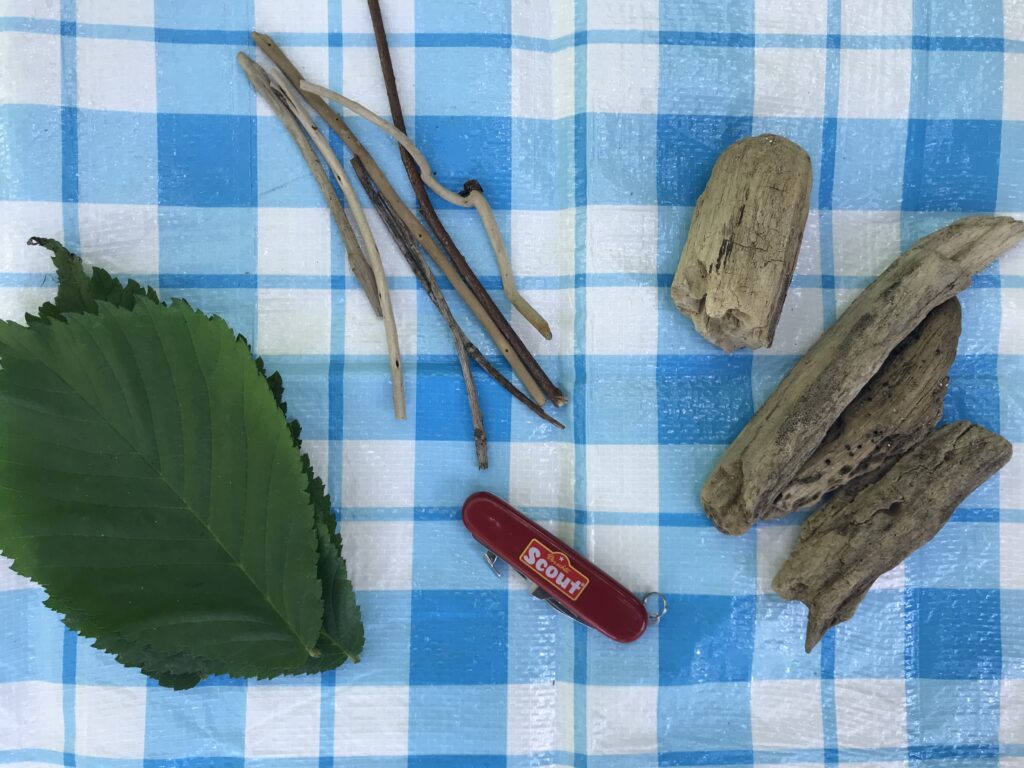
To make the boats, you will need the following materials:
- small pieces of lightweight driftwood
- short, lightweight twigs
- large(ish) leaves
- optional: small stones & long blades of grass
NOTES: Look for small twigs on the ground nearby; don’t damage any trees! Pinching a couple of leaves of a tree or bush is fine, but only take as many as you need.
You will also need some kind of tool to make holes in your wood. We used a junior pocket knife. These are quite common in Germany, I think they have a more relaxed approach to giving young children tools. The pocket knife includes a short knife with a blunt tip, a bottle opener, scissors, and a screwdriver. The screwdriver was perfect for boring holes into the soft wood. You could also just use a screwdriver.
The wood we used was driftwood we had collected on an earlier beach trip. We took this with us to local woods with a stream running through them (the Hermitage of Braid, for anyone Edinburgh-based) and collected the other materials there.
Watch the short video above for a quick overview, or follow the step-by-step guide below:
Step 1: Make a small hole in your piece of driftwood, just big enough for a small twig to fit in. We found the best way to do this was with a screwdriver, as the driftwood was quite soft. For harder wood you might need an awl. Depending on age of crafter and tool used, this may be an ‘adults only’ job!
Step 2: Push your twig firmly into the hole so that it can’t fall out. If it feels to loose, you can warp a bit of leaf round the end to make it fit more snugly.
Step 3: Take a large(ish) leaf – big enough to make a good sail but not too big to swamp your boat – and thread it onto the twig as shown here:
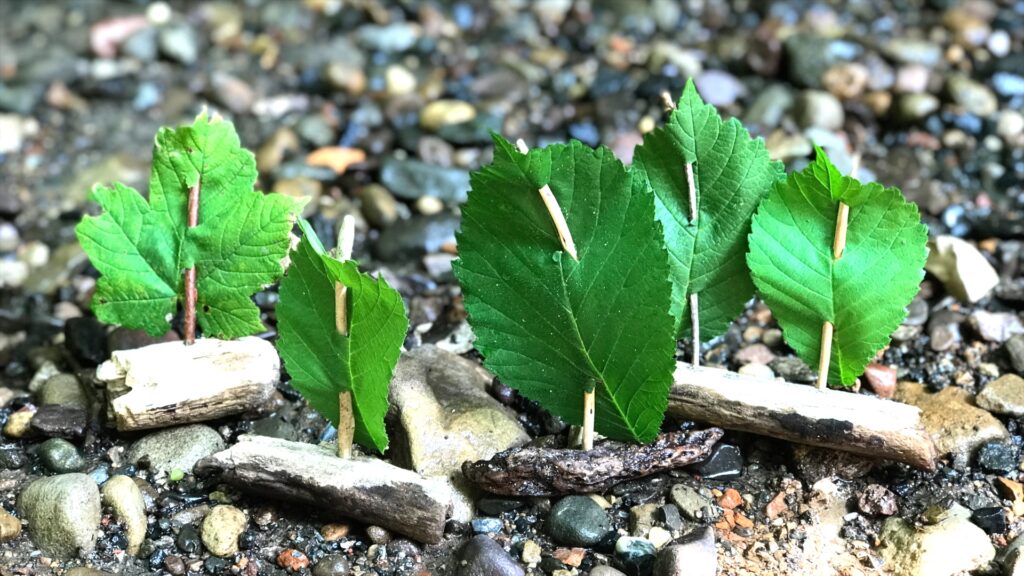
You can see with the longer piece of wood on the right, we actually added two sails!
Step 4: Take your boat for a test run. Chances are it might fall over, because the sail makes it too top-heavy. But not too worry, we can fix this!
Step 5: Find a small stone; slightly flat is best. Take some longer blades of grass, and use them to tie the stone to the bottom of your boat. This will give it more weight to counter the top-heaviness of the sail. Here’s a close-up of the weight on one of our boats:
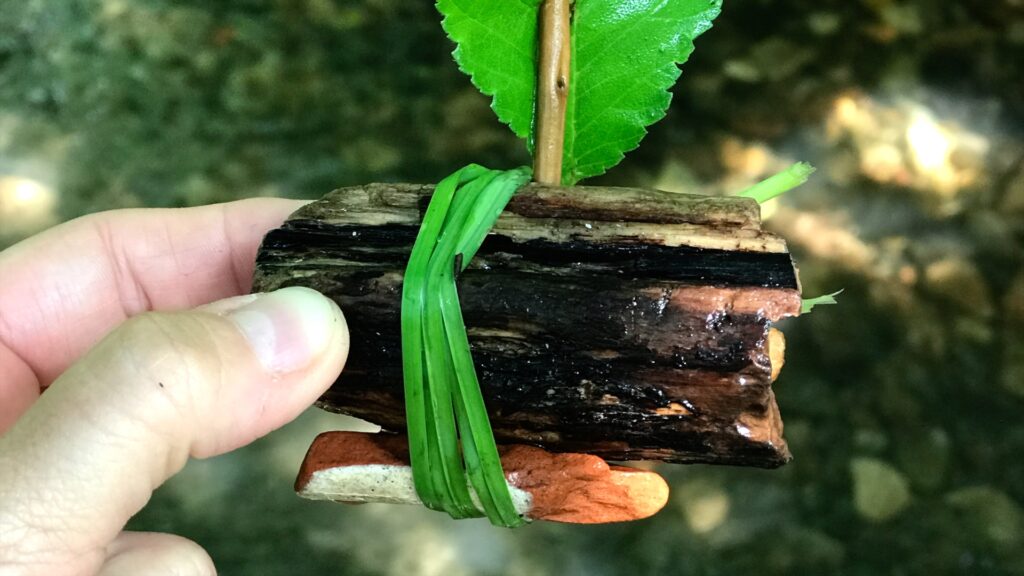
Step 6: Now test your boat again. You may have to go back-and-forth a bit, trying different stones, angles, or sizes of twigs and leaf sales. The testing, re-adjusting, and testing again is part of the fun of this activity!
Once your boat is ready to sail without falling over, you can send it off down the stream! (or keep it close by if you want to play with it a bit). Because it’s made entirely out of natural materials, you don’t need to worry about it polluting the water with any of its components.
NOTE: If you decide to substitute any of the natural boat parts, e.g. by using string or corks from home, you absolutely should not leave the boat in the stream! Make sure you take you take any non nature materials back home again.
Rainy Day Alternative
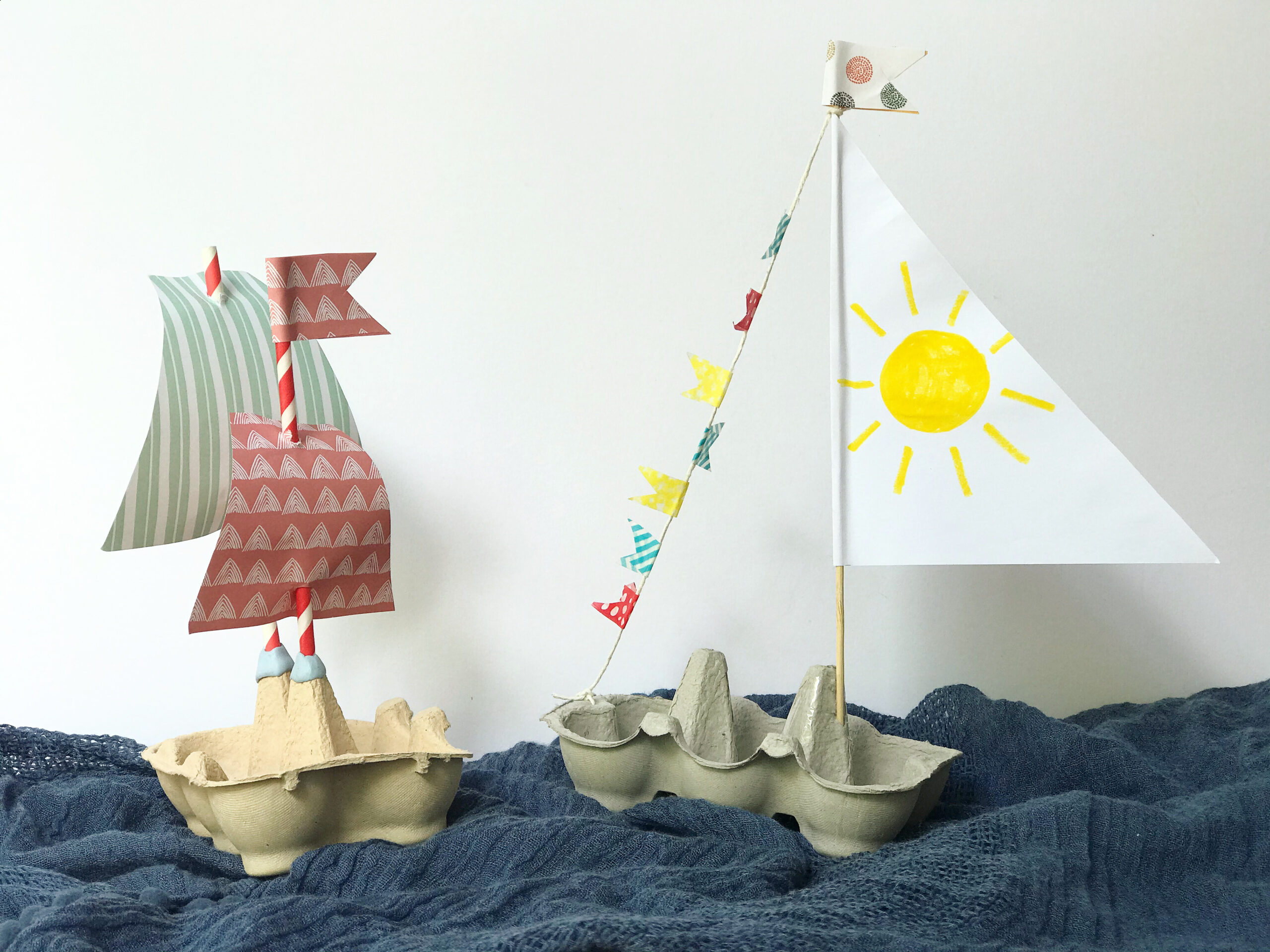
If driftwood boats sound too complicated, you don’t live near a stream, or you are looking for a rainy day alternative, then check out my previous tutorial for making sailing boats out of egg cartons!
If you enjoy the activities on my blog and would like to support me in creating for great content for you, I am always grateful for donations to help with the running costs of the blog.


2 Comments