Scottish Book of the Week: A Pattern of Secrets
We’re going back in time again for our next Scottish Book of the Week, this time to 19th century Paisley. A Pattern of Secrets by Lindsay Littleson is a gripping Victorian adventure story that expertly blends facts with fiction. I couldn’t put it down!
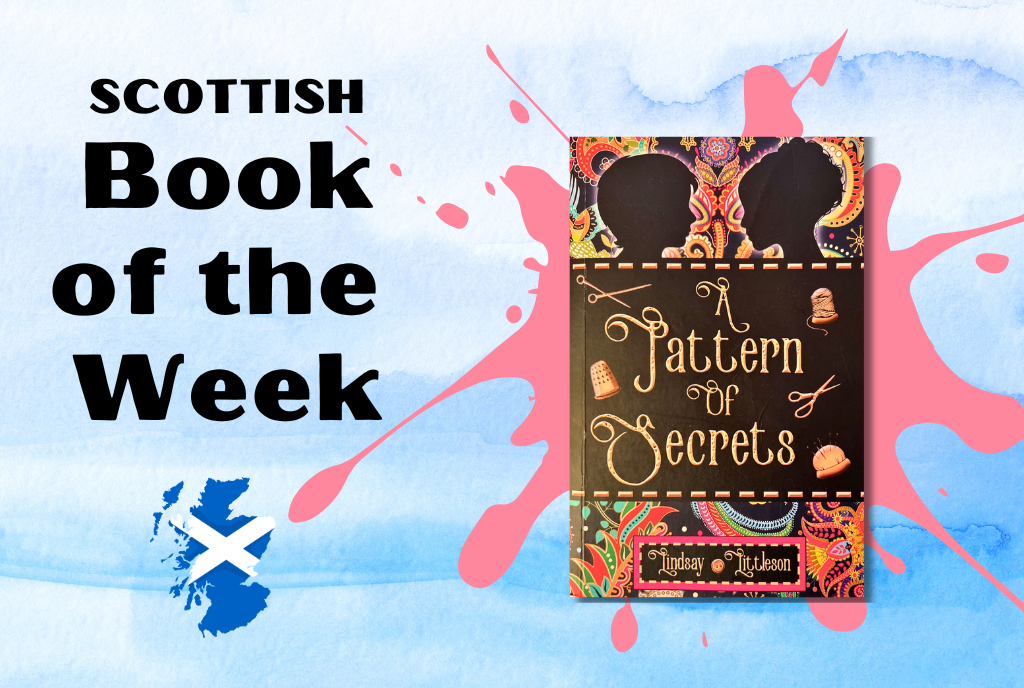
Book Details
Title: A Pattern of Secrets
Author: Lindsay Littleson
Genre: Historical (set in 1876)
Recommended reading age: 8+
Trigger warnings: Death of a parent
Scottish Setting
The book is set in Paisley, which in the 19th century became the thread manufacturing epicentre of the world. Some of the prominent places mentioned in the story, such as Paisley Abbey, Gilmour Street Station, Fountain Gardens and Brodie Park still exist today. Quite a few remaining street names are mentioned too, including Thread Street, Shuttle Street and Lawn Street, which all reference Paisley’s textile heritage (Lawn cloth is a type of plain weave fabric that is commonly made with cotton).
Paisley Grammar School still exists today but has changed location since the setting of the story, with the present school building being opened in 1898. The “rickety” Abbey Bridge that makes a brief appearance was also replaced with a new bridge in 1879. And then there are of course the thread mills, which shaped much of Paisley’s history. Today the Paisley Thread Mill Museum, founded in 2003, tells the story of the Clarks and Coats Mills, which both feature in the book.
Plot Summary
Set in Paisley in the 1870s, at a time which saw the collapse of the Paisley shawl industry, A Pattern of Secrets skilfully blends facts with fiction, intertwining the fates of the historical Rowat family with the fictional Muir family. The story is told from the points of view of 12 year olds James ‘Jim’ Muir and Jessie Rowat, with chapters alternating between them.
Jim’s father used to be an accomplished weaver, but after losing his job with shawl manufacturer William Rowat when the latter shut down his business, the Muir family ends up at the Abbey Poorhouse after defaulting on their rent. There they are separated, with Jim and his father being sent to the men’s block, whilst his baby sister and younger brother stay with his mother in the women’s block. But it’s not long before his brother is due to turn 8, which will mean being torn away from his mother and moving over to the men’s block.
“But the bitter truth was I could no nothing. I worked as a piecer at the Clark Mills, but twelve-year-old lads got paid pennies. My wages couldn’t save my family from losing their home; couldn’t save us from the poorhouse.” (Chapter 1)
At the same time, Jessie – a girl born into a life of wealth and privilege – has just moved in with her grandmother along with her widowed father and younger sibling. In stark contrast to Jim’s move to the poorhouse, the grand Rosehill House comes with servants and a large garden. Oblivious to the repercussions of her father’s actions, Jessie’s life could not be more different from Jim’s.
“The shawl was still there, lying over the chair. I reached out my hand to stroke the material and circled my finger round the elaborate curved teardrops and stylised flowerhead.” (Chapter 9)
Jim’s and Jessie’s paths cross, when Jim discovers that a shawl his father once made for his mother, into which he had sewn the family fortune of five guineas, ended up in the possession of the Rowats. Determined to free his family from the poorhouse before his brother’s impending birthday, Jim escapes the poorhouse and sets out to retrieve the shawl and his family’s money – all he has to do is break in to Rosehill House to steal it back, without getting caught. Which is easier said than done…
Conclusion
This was a brilliant historical tale that drew me in right from the first page. Although I’ve never been to Paisley myself, it was clear the book has been meticulously researched – the wealth of local and period details paint a good picture of Victorian life in Paisley, and really bring the story and history to life. The narrative switches between the two characters also accentuate the divide between rich and poor that is portrayed in the story. And not only do you step back in time and learn more about a pivotal time in industrial history and Paisley’s weaving industry – when you add in a mysterious family heirloom, and Jim’s quest to save his family from the poorhouse, you have yourself a gripping adventure that draws you right in. I just couldn’t put it down! I think the recommended reading age is spot on too, and the book would also make a great class novel for pupils studying the Victorians and/ or the Industrial Revolution.
Bonus Info
The back of the book includes an author’s note about what happened to the Rowat family after the time period covered in the book, particularly Jessie Rowat who went on to marry the director of the Glasgow School of Art, Francis Newbery. Jessie became an accomplished artist and embroiderer, and was one of the Scottish artists known as the ‘Glasgow Girls’. The book also includes some paintings and photographs of Jessie, Grand Central Fountain (from Fountain Gardens) and Paisley Abbey; a suggested walking tour through Paisley if you want to follow in the footsteps of the places and streets that feature in the story; and a list of museums and other places to visit to find out more about Paisley’s textile history. Lindsay Littleson has also provided further resources for teachers and home schoolers on her own website.
A Pattern of Secrets is available from Bookshop.Org (Affiliate Link) or you can order it from your favourite indie bookshop.
Further Reading
For further children’s books set in Scotland, check out this map where I am logging my reading journey: